
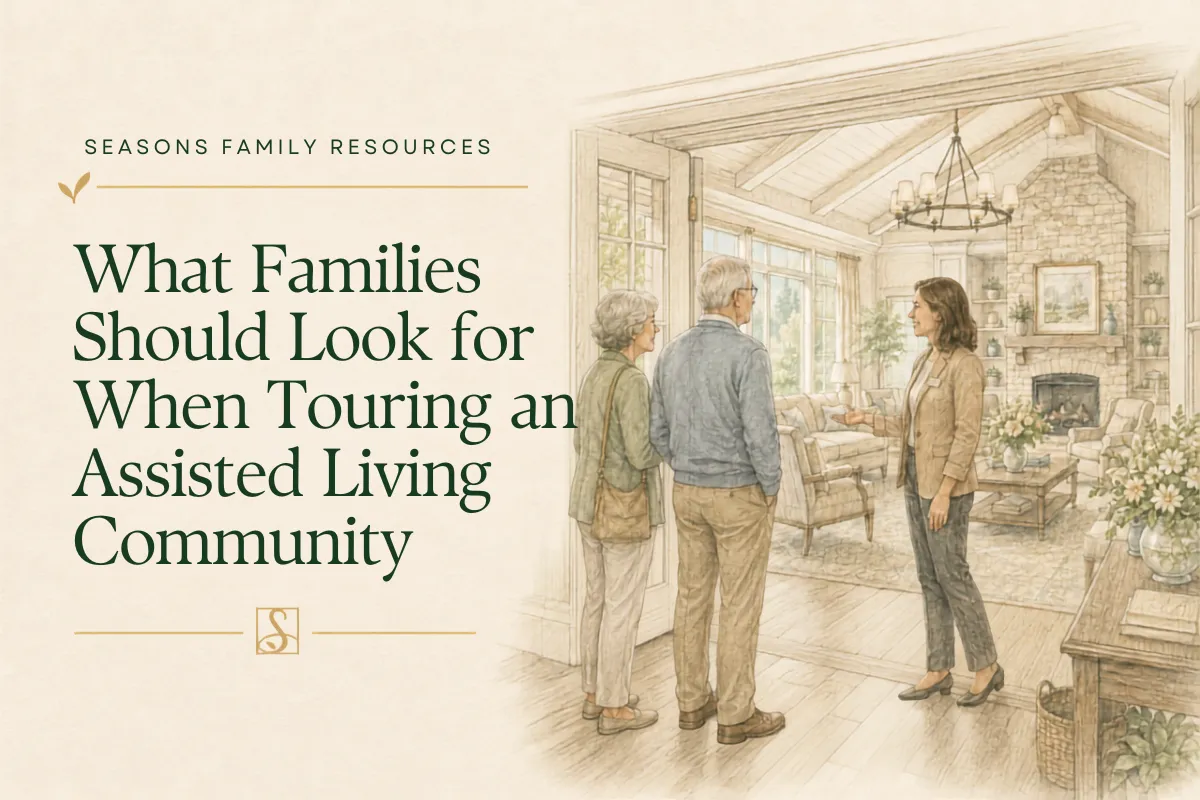
What Families Should Look for When Touring an Assisted Living Community
A beautiful lobby can be built. A culture of care has to be lived.
That is the thought I want families to carry into every assisted living tour.
The building matters. It should be safe, clean, comfortable and well maintained. But a polished entrance, a model apartment and a well-rehearsed presentation tell you very little about what happens at 2:00 in the morning, during a difficult medication pass or when a family raises a concern.
The strongest clues are usually in the ordinary moments. You have to slow down enough to notice them.
Watch the interactions that are not part of the tour
Pay attention to how team members speak to residents when nobody appears to be performing for you.
Do they use residents’ names? Do they make eye contact? Do they explain what they are doing before helping? Does the conversation sound warm and familiar, or rushed and transactional?
Notice how residents respond to the staff. Familiarity cannot be manufactured for a tour. When residents are comfortable teasing a caregiver, asking for something or simply sitting nearby, that tells you something about the relationship.
Also watch what happens when a resident needs help while your guide is talking. The response is more revealing than the brochure.
Ask who is actually present
Families often ask for a staffing ratio. It is a fair question, but a single number can create false confidence.
Ask how staffing changes by shift. Who is in the building overnight? Who can make a decision when the executive director is not there? How are call-outs covered? Are caregivers assigned consistently enough to know residents’ routines and notice changes?
If the community provides memory care, ask what dementia-specific training staff receive and how they respond to wandering, distress, resistance to care or disrupted sleep.
Staff tenure matters too. You do not need every employee to have been there for ten years, but constant turnover makes consistency difficult. Ask how long the key leaders and direct-care team members have been with the community.
Understand how care is assessed and priced
The starting monthly rate is not always the final monthly cost.
Ask exactly what is included. Medication assistance, bathing, dressing, laundry, incontinence support, transportation and nighttime care may be included, billed separately or placed into a care-level system.
Request a realistic estimate based on your loved one’s current needs, not the lowest advertised price. Ask how often care is reassessed, who performs the assessment and how the family is notified before charges change.
At Seasons, we use an all-inclusive pricing approach for the care and services we provide. Other models can also be legitimate. The important thing is that the family understands the model before moving in. Surprises are not a care strategy.
Test the communication chain
Ask one simple question: If I am worried about my mother at 8:00 on a Friday night, who do I call?
You should receive a clear answer.
Then ask how families are informed about falls, medication changes, appetite changes, behavior changes and other concerns. Who documents the issue? Who follows up? How does the provider make sure information does not disappear between shifts?
Large organizations can deliver excellent care, and small organizations can fail. Size alone is not the answer. What matters is whether accountability has a name and whether that person is accessible.
Seasons was built around a smaller, local model because I wanted accountability to remain close. When a family calls, the concern should not vanish into a corporate structure. That principle matters far more to me than the size of a lobby.
Visit the life of the community, not just the real estate
Look at the rhythm of the day. Are residents gathered only because a tour is happening, or is there genuine activity? Are people offered choices? Is there a comfortable place to sit quietly? Does the schedule reflect the people who live there, or does it read like a generic calendar?
If possible, visit near a meal. Food is not only nutrition. It is routine, dignity, pleasure and one of the main social experiences of the day. Notice whether the dining room feels calm, whether residents receive help without being embarrassed and whether the meal resembles what was promised.
Use all your senses. Cleanliness matters, but so does context. A care community is a real home where real care is happening. One temporary odor is different from a persistent pattern. Noise can signal energy, distress or poor organization. Ask rather than silently assuming.
Ask what happens when needs change
The community should be honest about its limits.
Ask what changes it can manage, what outside services may be brought in and what conditions could require a resident to move. Ask how the team handles a hospital return and whether it reassesses the resident before readmission.
No provider can promise that every resident can remain forever. Be cautious if someone does. A trustworthy answer explains both the community’s capabilities and its boundaries.
Do some checking after the tour
A tour is one source of information, not the whole decision.
Review the provider’s license and regulatory history. In Texas, families can search long-term care providers through the Health and Human Services system. Ask the community about any findings that concern you and listen to whether the response is direct or defensive.
Talk with families if the community can connect you with willing references. Return for a second visit. If drop-in visits are permitted, consider seeing the community when it is not prepared specifically for you.
Most importantly, compare what you heard with what you observed. If the presentation emphasizes personalized care but nobody can describe your loved one’s likely routine, keep asking questions.
The feeling you are looking for
Families often tell me they are looking for a place that feels like home. I understand that, but “home-like” should mean more than furniture and paint colors.
It should mean that people are known. Preferences are remembered. Concerns reach someone who can act. Help is available without making the resident feel like a task. Leadership is present enough to understand what is happening inside the community.
Do not let one beautiful feature make the decision for you. Look for the people, systems and accountability that will still be there after the tour is over.
A note from Shawn
If your family is beginning this conversation, you can download our complimentary Senior Resource Guide or contact us directly. We are happy to listen, answer questions and tell you honestly whether Seasons may be the right fit.
Download the guide: https://www.meetseasons.com/family-resources#guide-form
Call: 936.274.3177
ABOUT THE AUTHOR


